A palace reborn from ashes
Granite and limestone, silk and gold — a royal stage for Spain’s story.
Table of Contents
Origins and a palace reborn
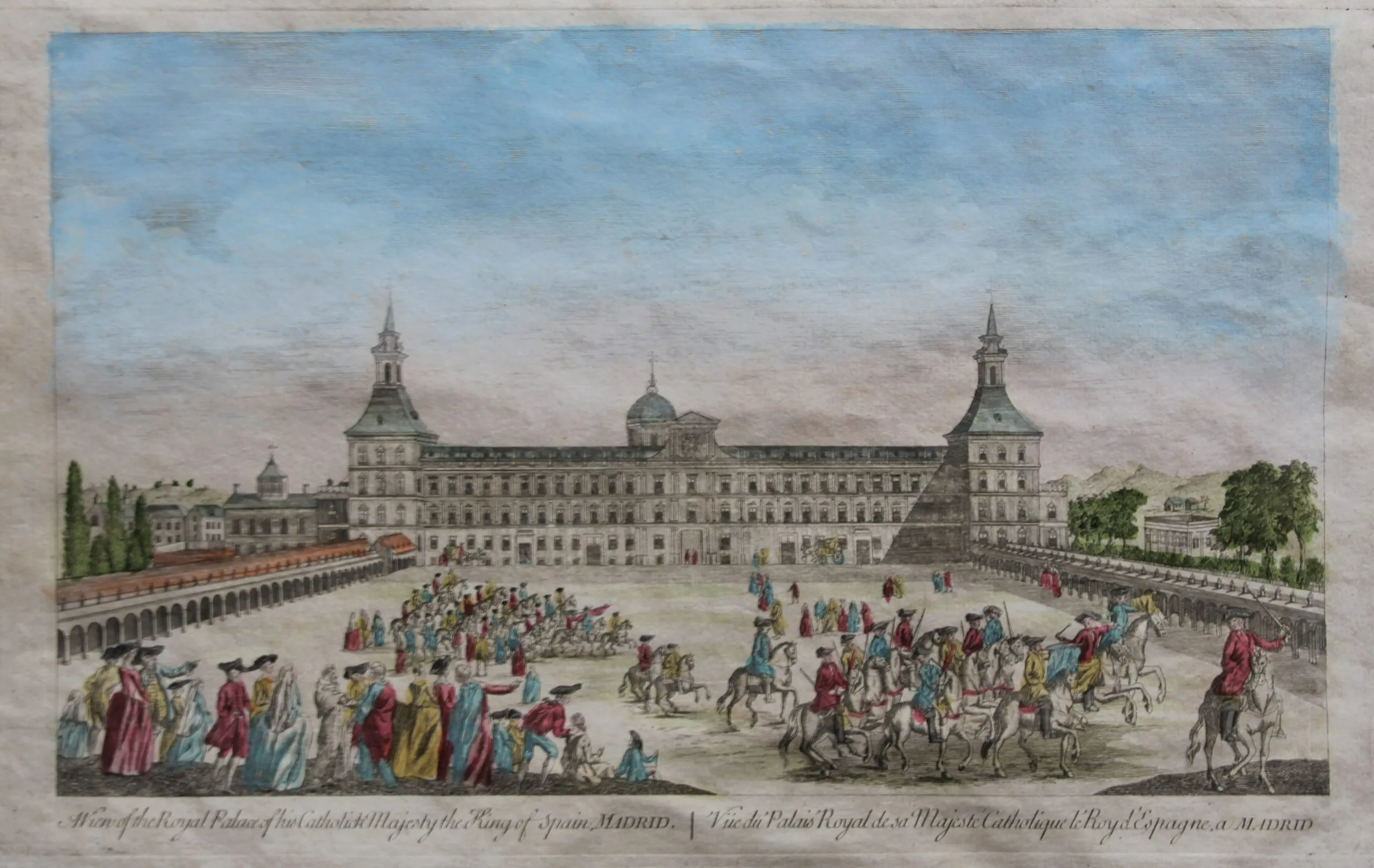
Long before chandeliers and silk, a fortress stood here. Madrid’s old Alcázar — a royal residence shaped by centuries of Habsburg rule — burned on a bitter Christmas night in 1734. Out of that devastation, the first Bourbon king of Spain, Philip V, imagined a palace worthy of a new dynasty: solid as a citadel, splendid as a court theater, and visible on the city’s high ridge like a crown.
Architect Filippo Juvarra drew grand plans influenced by Versailles and Italian baroque, later adapted on site by Giovanni Battista Sacchetti and Spanish masters. The new palace rose in luminous limestone and rugged granite, an immense rectangle wrapped around courtyards and framed by the cathedral and gardens. Successive monarchs — especially Charles III, the ‘mayor‑king’ — refined the interiors with Italian stuccadores, Spanish silk weavers, and musicians who turned salons into sound.
Architecture, plan, and materials
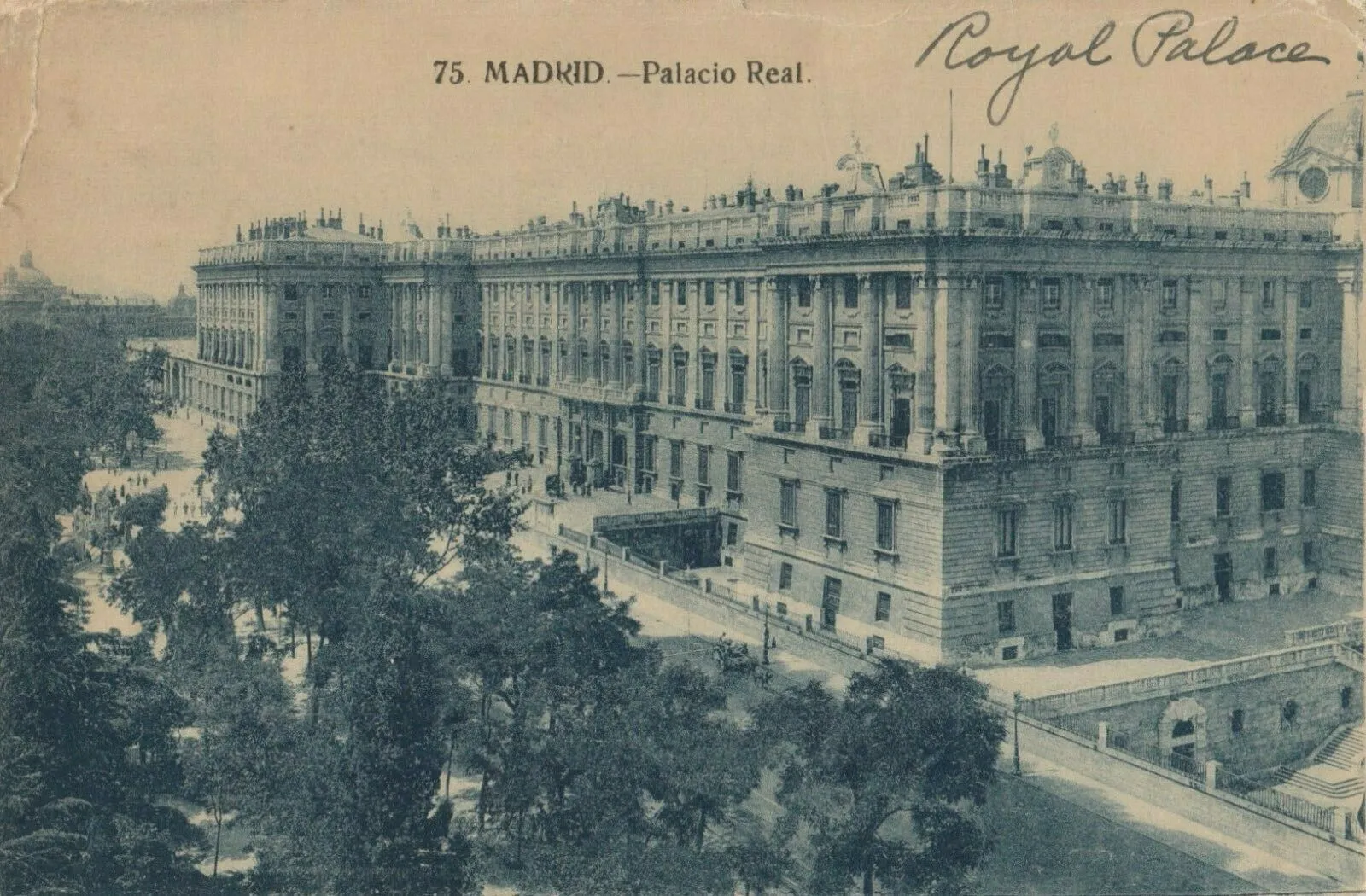
The palace’s plan is orderly and ceremonial: axial corridors, enfilades of rooms, and courtyards that draw in air and light. Robust granite forms the podium; creamy Colmenar limestone clads the facades. The Grand Staircase, with its sweeping balustrades and sculpted lions, announces a world of rank and ritual — a piece of theater where every landing frames a sovereign approach.
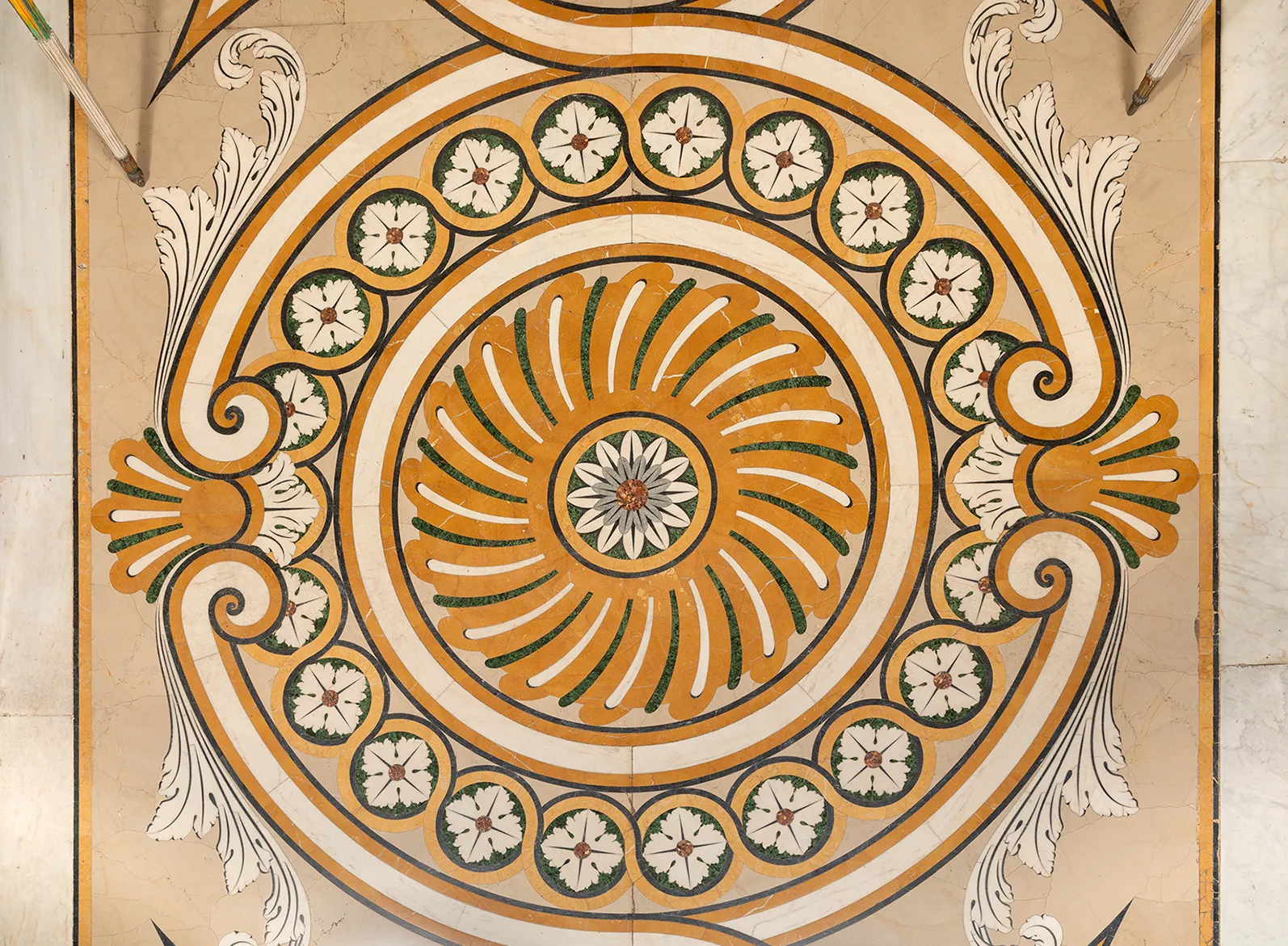
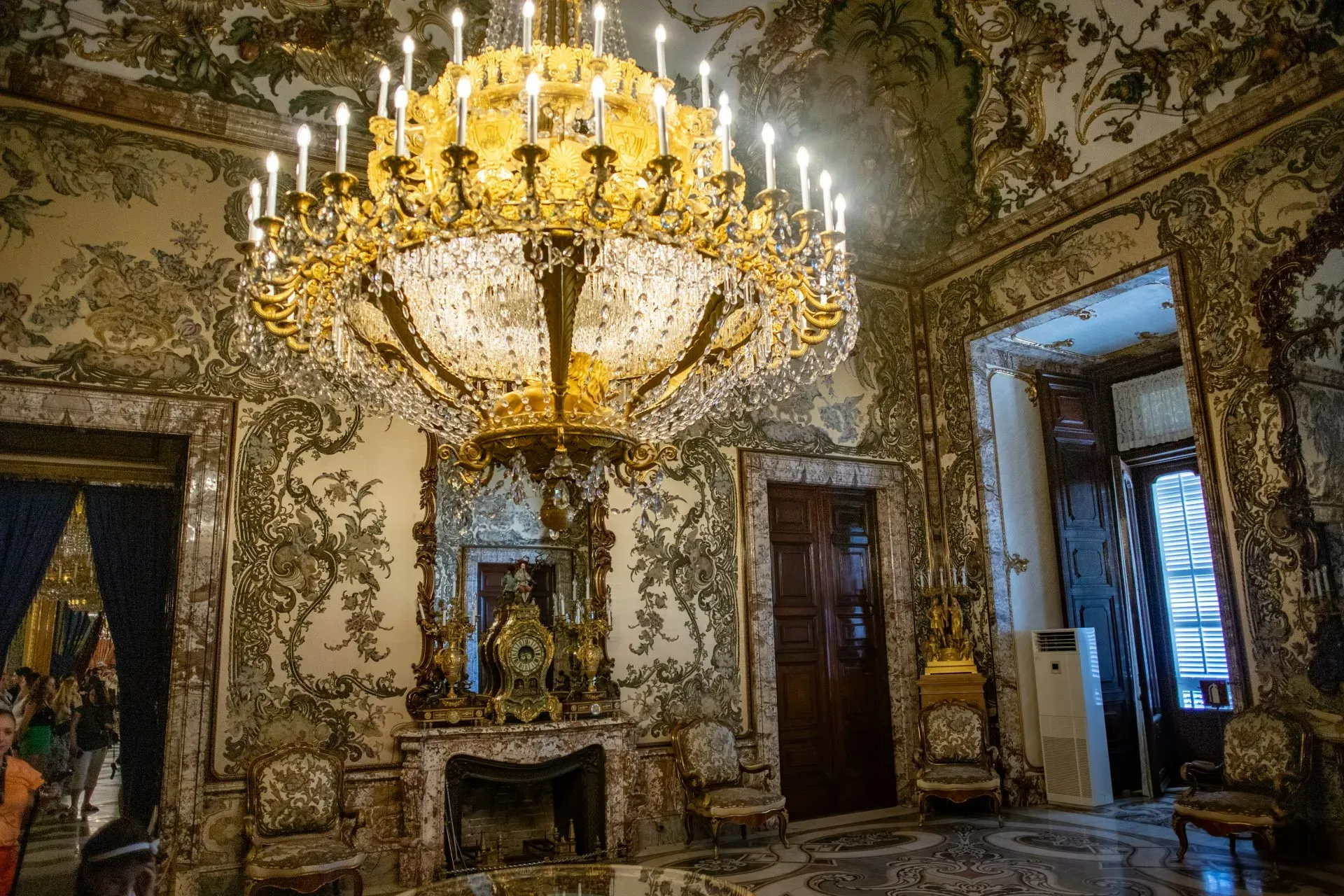
Inside, each room speaks a different tongue of style — rococo exuberance in the Gasparini Room, neoclassical calm in the Hall of Columns, and velvet‑and‑gold magnificence in the Throne Room. Floors and furniture whisper of guilds and hands: marquetry, silk damasks from the Royal Tapestry Factory, clocks with delicate escapements, and porcelain that once chimed with conversation.
Ceremony and state rooms
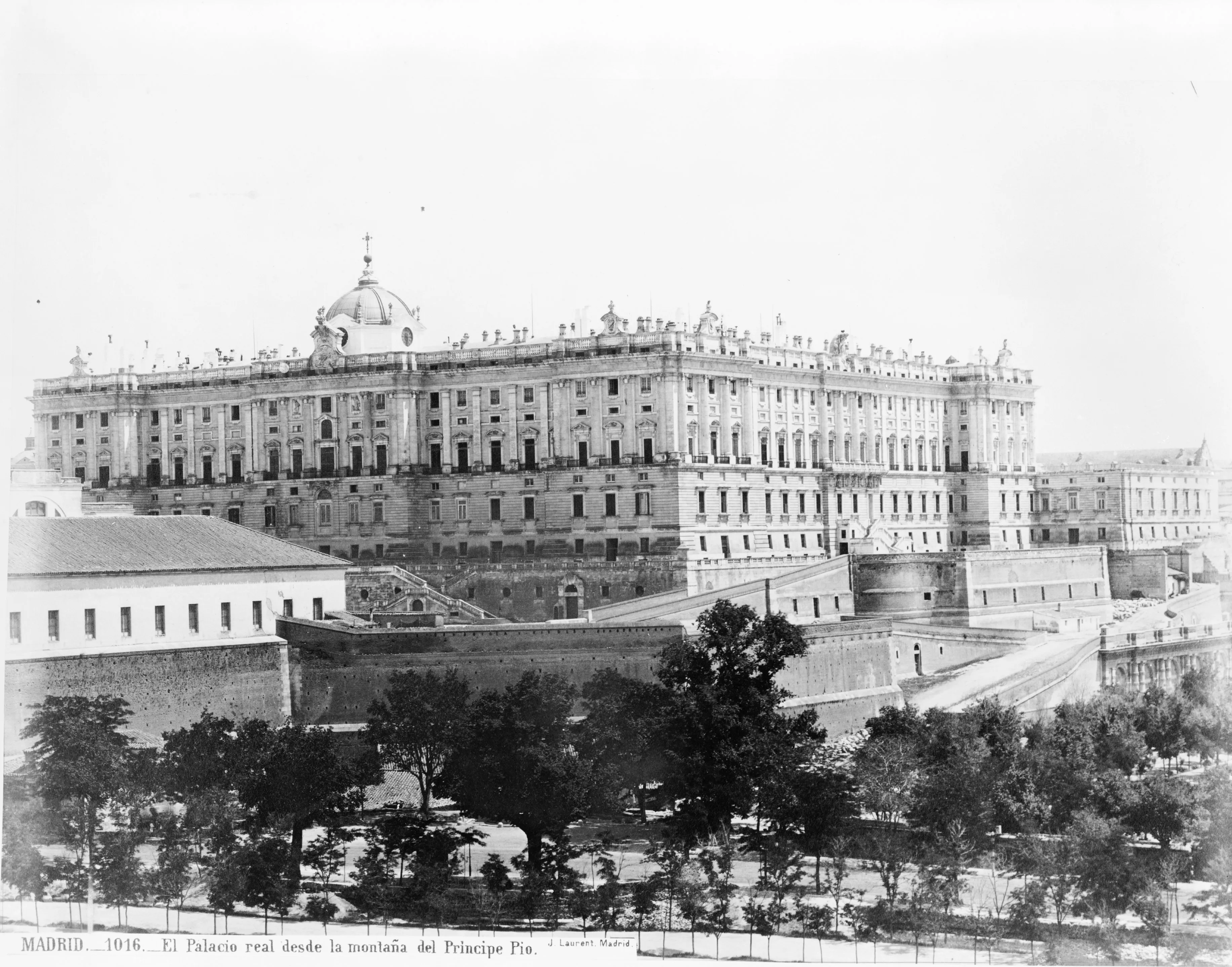
State rooms aren’t merely pretty — they choreograph power. Ambassadors once approached under Tiepolo heavens; ministers debated beneath stuccoed garlands; velvet walls amplified whispers as much as music. The Throne Room’s lions flank the dais like living heraldry, reminding visitors that protocol, like architecture, is a careful art.
Elsewhere, the Hall of Columns hosted banquets and signings; the Royal Chapel paired ceremony with song; and anterooms staged the etiquette of waiting and being seen. Even the sequence of doors and thresholds — aligned to reveal vistas or closed to conceal them — manages tempo, mood, and authority.
Collections: art, tapestries, and clocks
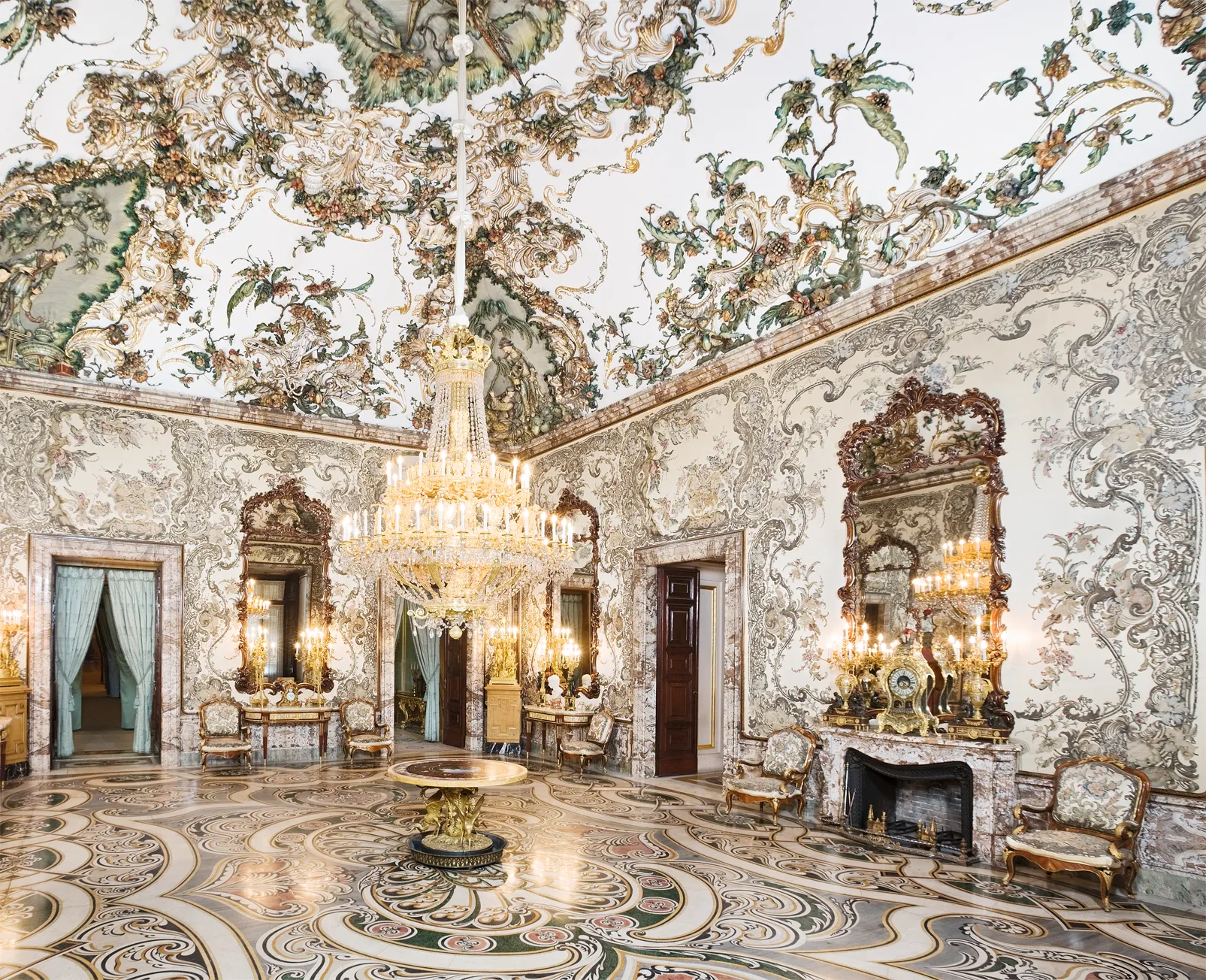
Look closely: a tapestry is more than wool and silk — it’s diplomacy woven in color. The palace preserves rich series from the Royal Tapestry Factory, designs by Goya and Bayeu, and textiles that warmed rooms and dazzled guests. Chandeliers glitter above cabinets of porcelain; bracket clocks tick in gilded cases; mirrors extend space into infinity.
Paintings and frescoes connect Spain to Europe’s great ateliers. Tiepolo’s light floats above protocol; Mengs’s classicism anchors clarity; portraits carry the quiet theater of gaze and power. Together, the collections turn the palace into a museum of living ambiance — objects still in dialogue with the rooms that shaped them.
Armoury, music, and spectacle
The Royal Armoury ranks among Europe’s finest: parade armors engraved like books of steel, tournament lances, and saddles worthy of ceremony. Child‑sized suits show how power is taught as well as worn. Horses — real and sculpted — animate the collection with motion frozen in gleam.
Music heightens the palace’s sense of occasion. Stradivarius instruments, once played for sovereigns, survive as rare treasures; the chapel and salons still resonate in concerts. In a building made for appearances, sound completes the spectacle — the invisible silk that binds the scene. 🎻
Kitchens, pharmacy, and daily life
Behind the velvet hangs a world of work. The Royal Kitchens, a rarity preserved at scale, reveal copper pans, brick hearths, and ingenious devices that fed banquets and households with clockwork regularity. Recipes, like protocols, were codified — taste as tradition, plating as performance.
The Royal Pharmacy lines up jars like a painted army: remedies, syrups, and the science of care — a reminder that palaces manage bodies as well as empires. Here, everyday life hums quietly behind the spectacle, and the human side of court becomes surprisingly tender.
Fires, reforms, and restorations
The 1734 blaze erased the Habsburg Alcázar, but its memory shaped the new Bourbon palace — fireproofing, stone vaults, and a sober strength beneath the gilding. Later centuries brought reforms, wars, and the decision to keep the palace primarily for state ceremony while monarchs resided elsewhere.
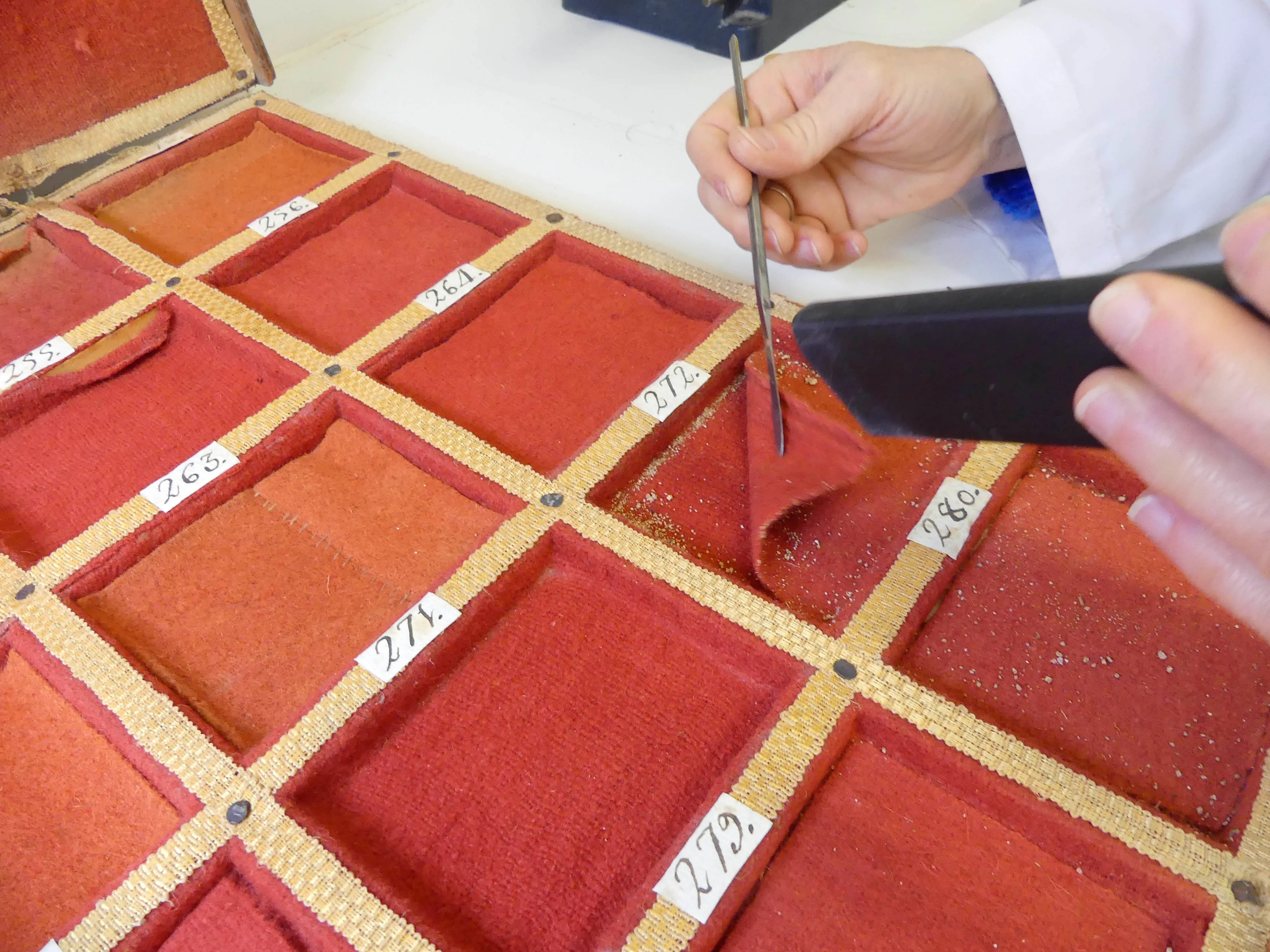
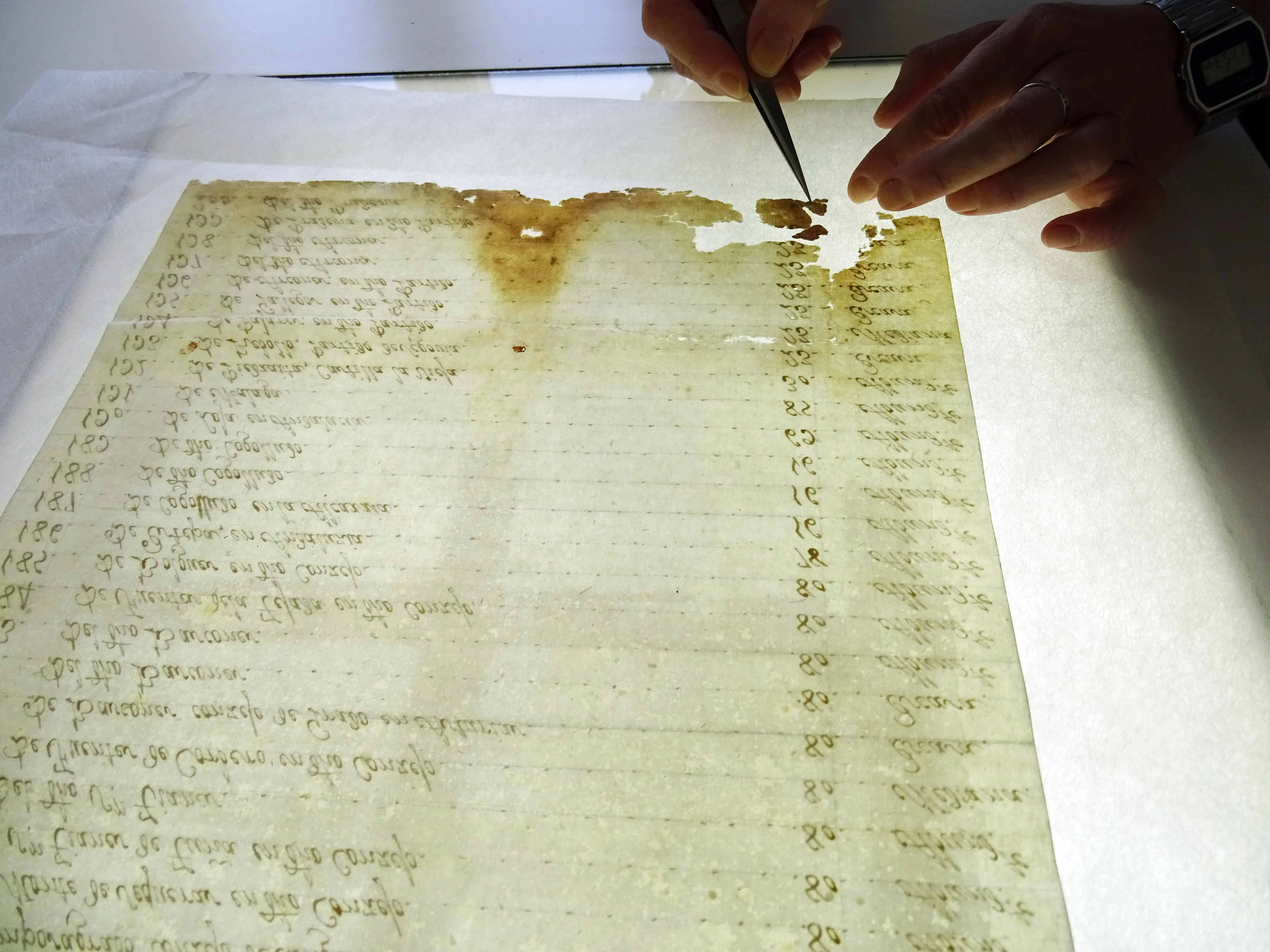
Restorations have balanced care with use: textiles cleaned, frescoes stabilized, floors renewed where feet insist on walking. Conservation here is living stewardship — keeping a stage set ready for its next act without freezing it in time.
Court life and state ceremony
A palace teaches choreography: who enters when, who sits where, and what each object means. State ceremonies, receptions, and signings still unfold here, echoing older rituals with modern purpose. The palace is both stage and script — architecture that tells people how to move.
Today, Spain’s monarchy and state use the palace for formal acts while sharing it generously with the public. On event days, routes shift; doors open or close; and rooms transform under lighting and flowers. It remains what it was made to be: a place where the country looks at itself and greets the world.
Heritage status and stewardship
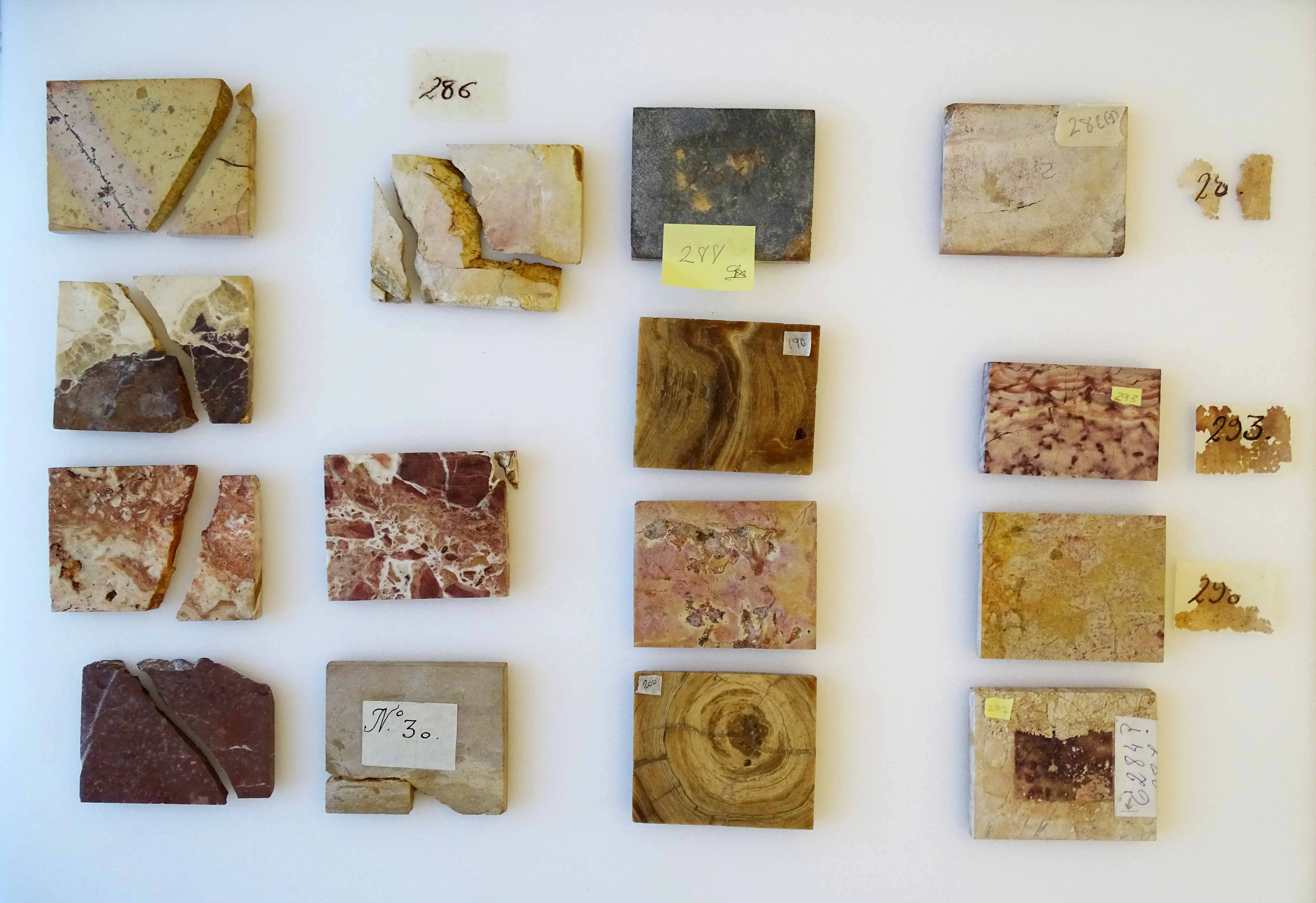
The Royal Palace forms part of Spain’s national heritage under Patrimonio Nacional. While not a royal residence in the everyday sense, it is a working palace — hosting ceremonies and safeguarding collections of armor, instruments, tapestries, and decorative arts of international importance.
Stewardship means balancing public access with preservation. Climate control, visitor flow, and painstaking conservation keep delicate materials alive. Each ticket helps fund that work — a quiet act of support that lets the palace keep welcoming future guests.
Tickets, tours, and special access
Entry options range from self‑guided visits with audio to themed guided tours. Special access to the Royal Kitchens or other areas may be available on certain schedules and sells out quickly in peak seasons.
Booking online secures your preferred time and lets you review flexibility, refund policies, and any ceremonial contingencies in advance — essential if you’re coordinating a tight itinerary.
Accessibility and visitor services
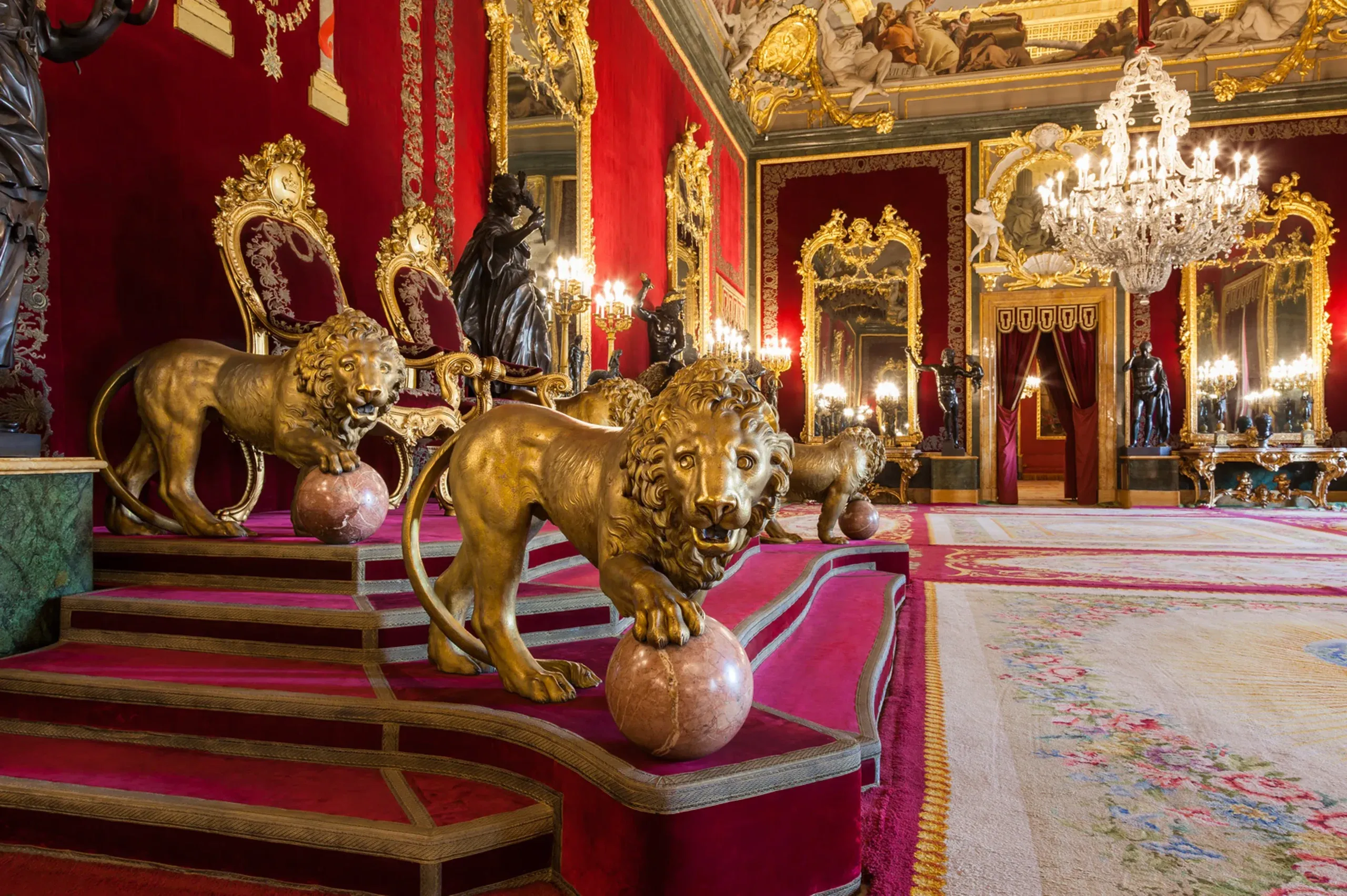
The main circuit offers accessible routes, lifts, and courteous assistance from staff. Security checks apply, and popular rooms can be busy — allow extra time if you prefer a calmer pace.
Some historic sections and gardens have cobbles or slopes; assistance may be helpful. Photography rules vary by room; tripods and large rigs are typically not allowed.
Neighborhood and nearby sights
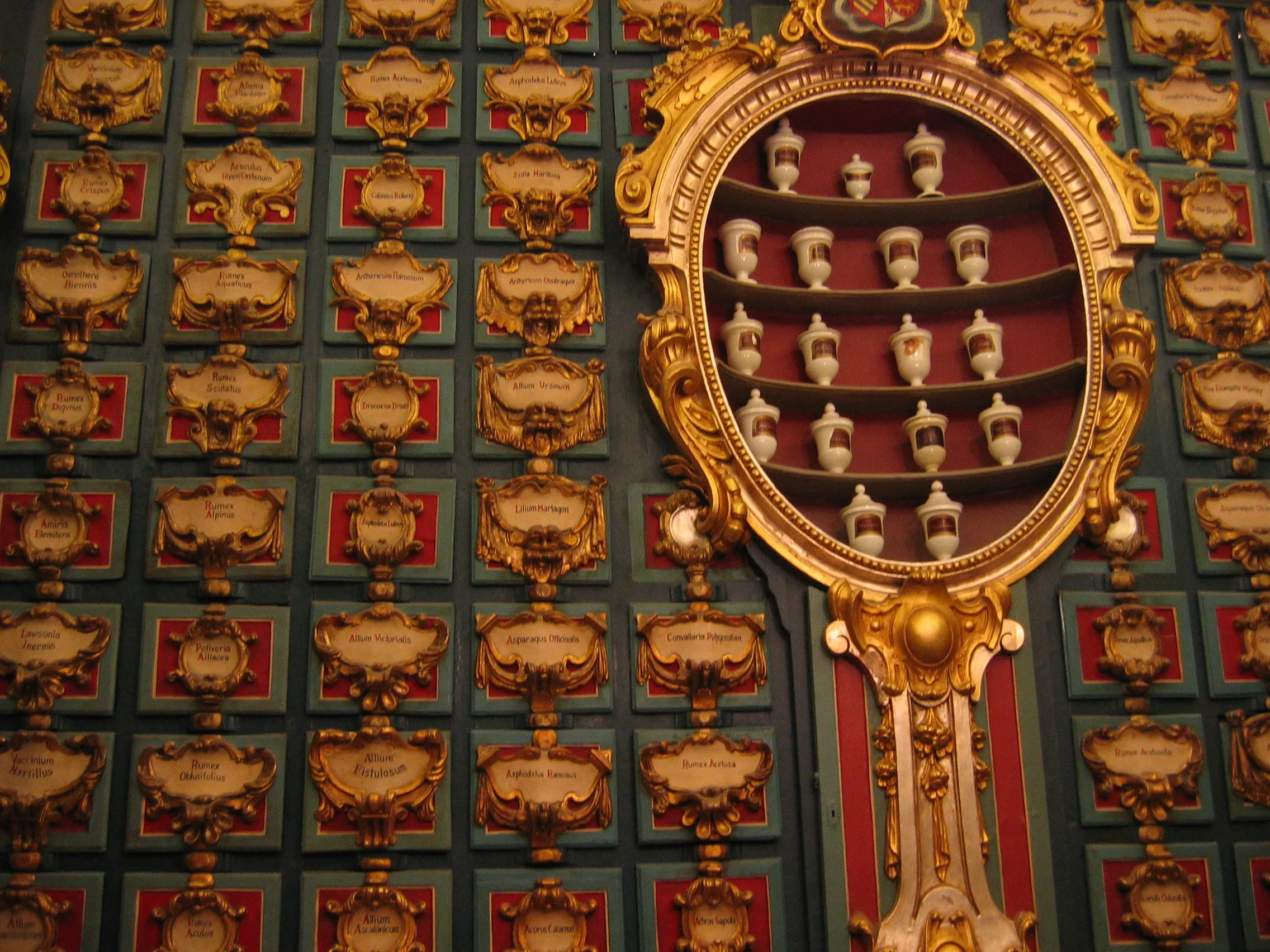
Step across to Almudena Cathedral, then linger in Plaza de Oriente among statues of Spain’s kings. The Sabatini Gardens terrace offers mirror‑still pools and tidy hedges; Campo del Moro spreads out below with broad lawns and long, romantic views.
Within a short walk you’ll find Plaza Mayor, the Teatro Real, and the lively tapas streets around La Latina. Come early or stay after your slot to enjoy Madrid’s golden light over the palace facade.
Why the Royal Palace matters
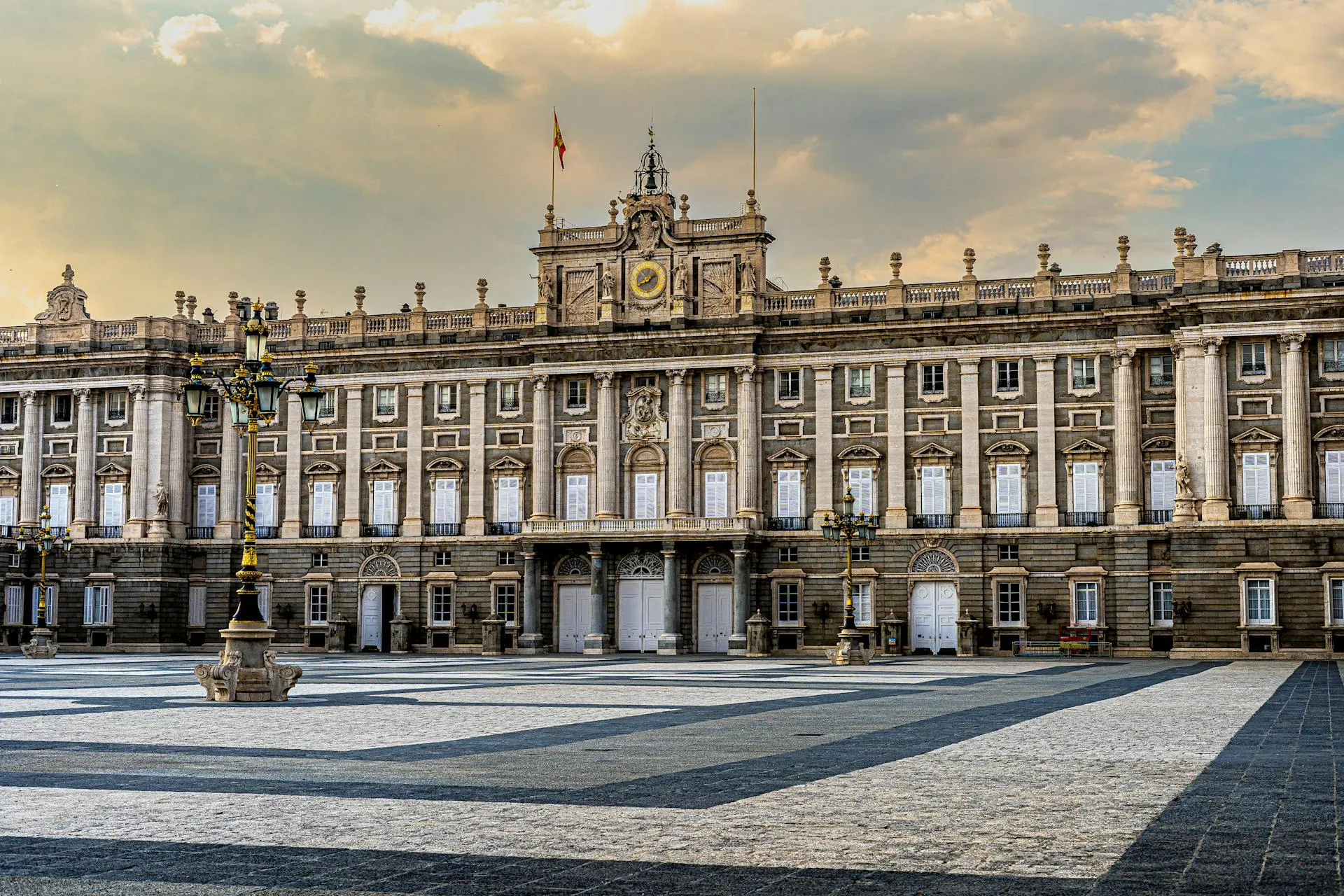
The Royal Palace is a book of Spain written in stone and silk: a government stage, a museum of craft, and a home for ceremonies that elevate civic life. It shows how architecture can carry history with grace, making room for both pageantry and quiet contemplation.
Every ticket sustains conservation and public access. Your visit supports the artisans, musicians, conservators, and guides who keep this grand house alive for future generations. Gracias for helping the palace keep telling its story. ✨
Table of Contents
Origins and a palace reborn
Long before chandeliers and silk, a fortress stood here. Madrid’s old Alcázar — a royal residence shaped by centuries of Habsburg rule — burned on a bitter Christmas night in 1734. Out of that devastation, the first Bourbon king of Spain, Philip V, imagined a palace worthy of a new dynasty: solid as a citadel, splendid as a court theater, and visible on the city’s high ridge like a crown.
Architect Filippo Juvarra drew grand plans influenced by Versailles and Italian baroque, later adapted on site by Giovanni Battista Sacchetti and Spanish masters. The new palace rose in luminous limestone and rugged granite, an immense rectangle wrapped around courtyards and framed by the cathedral and gardens. Successive monarchs — especially Charles III, the ‘mayor‑king’ — refined the interiors with Italian stuccadores, Spanish silk weavers, and musicians who turned salons into sound.
Architecture, plan, and materials
The palace’s plan is orderly and ceremonial: axial corridors, enfilades of rooms, and courtyards that draw in air and light. Robust granite forms the podium; creamy Colmenar limestone clads the facades. The Grand Staircase, with its sweeping balustrades and sculpted lions, announces a world of rank and ritual — a piece of theater where every landing frames a sovereign approach.
Inside, each room speaks a different tongue of style — rococo exuberance in the Gasparini Room, neoclassical calm in the Hall of Columns, and velvet‑and‑gold magnificence in the Throne Room. Floors and furniture whisper of guilds and hands: marquetry, silk damasks from the Royal Tapestry Factory, clocks with delicate escapements, and porcelain that once chimed with conversation.
Ceremony and state rooms
State rooms aren’t merely pretty — they choreograph power. Ambassadors once approached under Tiepolo heavens; ministers debated beneath stuccoed garlands; velvet walls amplified whispers as much as music. The Throne Room’s lions flank the dais like living heraldry, reminding visitors that protocol, like architecture, is a careful art.
Elsewhere, the Hall of Columns hosted banquets and signings; the Royal Chapel paired ceremony with song; and anterooms staged the etiquette of waiting and being seen. Even the sequence of doors and thresholds — aligned to reveal vistas or closed to conceal them — manages tempo, mood, and authority.
Collections: art, tapestries, and clocks
Look closely: a tapestry is more than wool and silk — it’s diplomacy woven in color. The palace preserves rich series from the Royal Tapestry Factory, designs by Goya and Bayeu, and textiles that warmed rooms and dazzled guests. Chandeliers glitter above cabinets of porcelain; bracket clocks tick in gilded cases; mirrors extend space into infinity.
Paintings and frescoes connect Spain to Europe’s great ateliers. Tiepolo’s light floats above protocol; Mengs’s classicism anchors clarity; portraits carry the quiet theater of gaze and power. Together, the collections turn the palace into a museum of living ambiance — objects still in dialogue with the rooms that shaped them.
Armoury, music, and spectacle
The Royal Armoury ranks among Europe’s finest: parade armors engraved like books of steel, tournament lances, and saddles worthy of ceremony. Child‑sized suits show how power is taught as well as worn. Horses — real and sculpted — animate the collection with motion frozen in gleam.
Music heightens the palace’s sense of occasion. Stradivarius instruments, once played for sovereigns, survive as rare treasures; the chapel and salons still resonate in concerts. In a building made for appearances, sound completes the spectacle — the invisible silk that binds the scene. 🎻
Kitchens, pharmacy, and daily life
Behind the velvet hangs a world of work. The Royal Kitchens, a rarity preserved at scale, reveal copper pans, brick hearths, and ingenious devices that fed banquets and households with clockwork regularity. Recipes, like protocols, were codified — taste as tradition, plating as performance.
The Royal Pharmacy lines up jars like a painted army: remedies, syrups, and the science of care — a reminder that palaces manage bodies as well as empires. Here, everyday life hums quietly behind the spectacle, and the human side of court becomes surprisingly tender.
Fires, reforms, and restorations
The 1734 blaze erased the Habsburg Alcázar, but its memory shaped the new Bourbon palace — fireproofing, stone vaults, and a sober strength beneath the gilding. Later centuries brought reforms, wars, and the decision to keep the palace primarily for state ceremony while monarchs resided elsewhere.
Restorations have balanced care with use: textiles cleaned, frescoes stabilized, floors renewed where feet insist on walking. Conservation here is living stewardship — keeping a stage set ready for its next act without freezing it in time.
Court life and state ceremony
A palace teaches choreography: who enters when, who sits where, and what each object means. State ceremonies, receptions, and signings still unfold here, echoing older rituals with modern purpose. The palace is both stage and script — architecture that tells people how to move.
Today, Spain’s monarchy and state use the palace for formal acts while sharing it generously with the public. On event days, routes shift; doors open or close; and rooms transform under lighting and flowers. It remains what it was made to be: a place where the country looks at itself and greets the world.
Heritage status and stewardship
The Royal Palace forms part of Spain’s national heritage under Patrimonio Nacional. While not a royal residence in the everyday sense, it is a working palace — hosting ceremonies and safeguarding collections of armor, instruments, tapestries, and decorative arts of international importance.
Stewardship means balancing public access with preservation. Climate control, visitor flow, and painstaking conservation keep delicate materials alive. Each ticket helps fund that work — a quiet act of support that lets the palace keep welcoming future guests.
Tickets, tours, and special access
Entry options range from self‑guided visits with audio to themed guided tours. Special access to the Royal Kitchens or other areas may be available on certain schedules and sells out quickly in peak seasons.
Booking online secures your preferred time and lets you review flexibility, refund policies, and any ceremonial contingencies in advance — essential if you’re coordinating a tight itinerary.
Accessibility and visitor services
The main circuit offers accessible routes, lifts, and courteous assistance from staff. Security checks apply, and popular rooms can be busy — allow extra time if you prefer a calmer pace.
Some historic sections and gardens have cobbles or slopes; assistance may be helpful. Photography rules vary by room; tripods and large rigs are typically not allowed.
Neighborhood and nearby sights
Step across to Almudena Cathedral, then linger in Plaza de Oriente among statues of Spain’s kings. The Sabatini Gardens terrace offers mirror‑still pools and tidy hedges; Campo del Moro spreads out below with broad lawns and long, romantic views.
Within a short walk you’ll find Plaza Mayor, the Teatro Real, and the lively tapas streets around La Latina. Come early or stay after your slot to enjoy Madrid’s golden light over the palace facade.
Why the Royal Palace matters
The Royal Palace is a book of Spain written in stone and silk: a government stage, a museum of craft, and a home for ceremonies that elevate civic life. It shows how architecture can carry history with grace, making room for both pageantry and quiet contemplation.
Every ticket sustains conservation and public access. Your visit supports the artisans, musicians, conservators, and guides who keep this grand house alive for future generations. Gracias for helping the palace keep telling its story. ✨